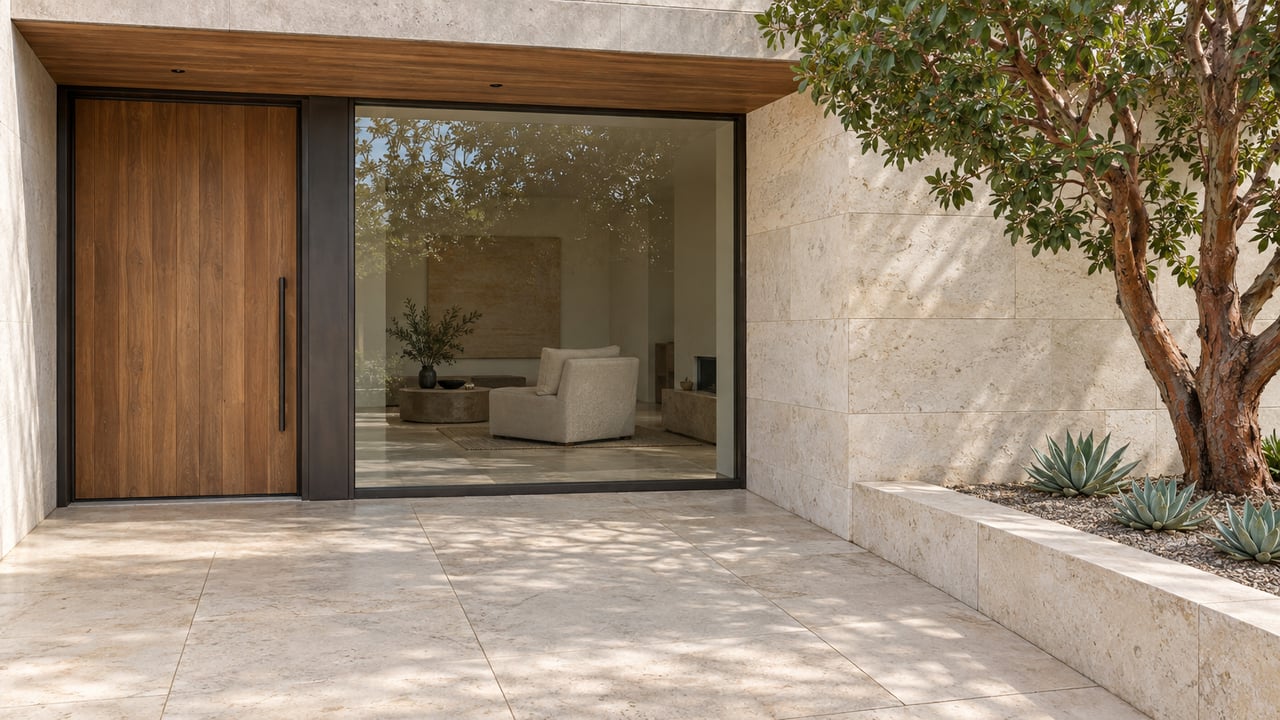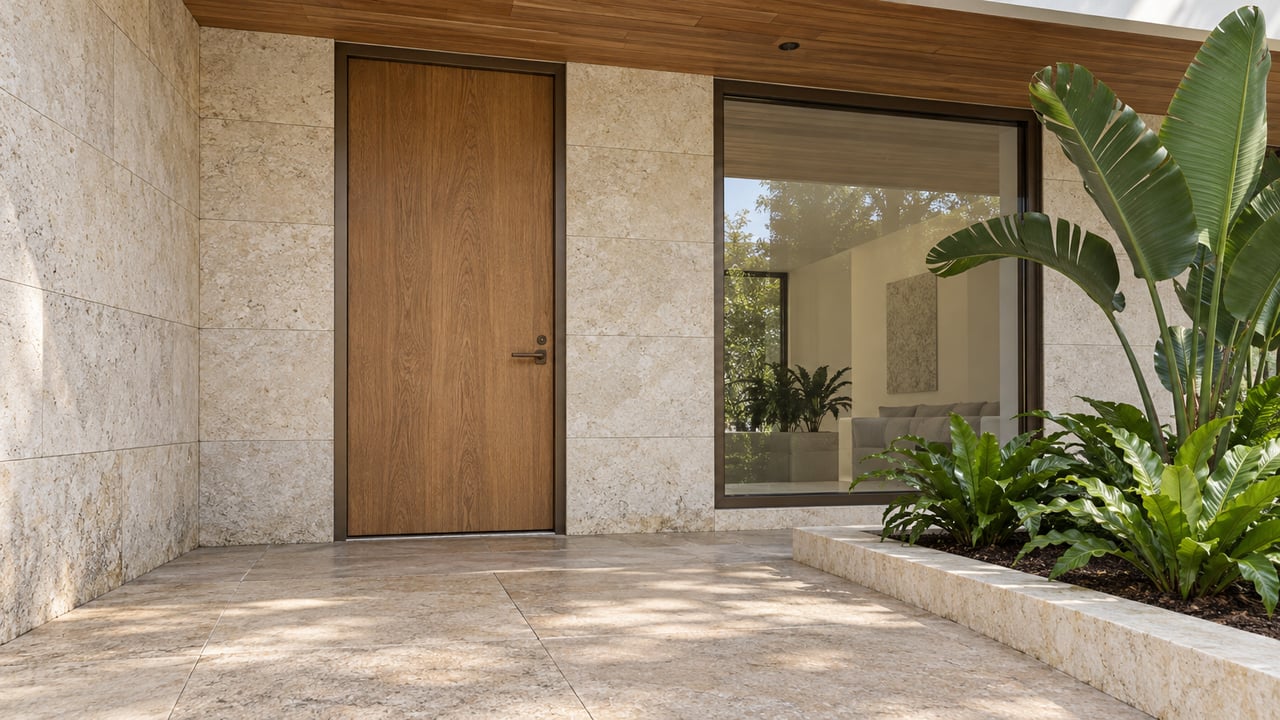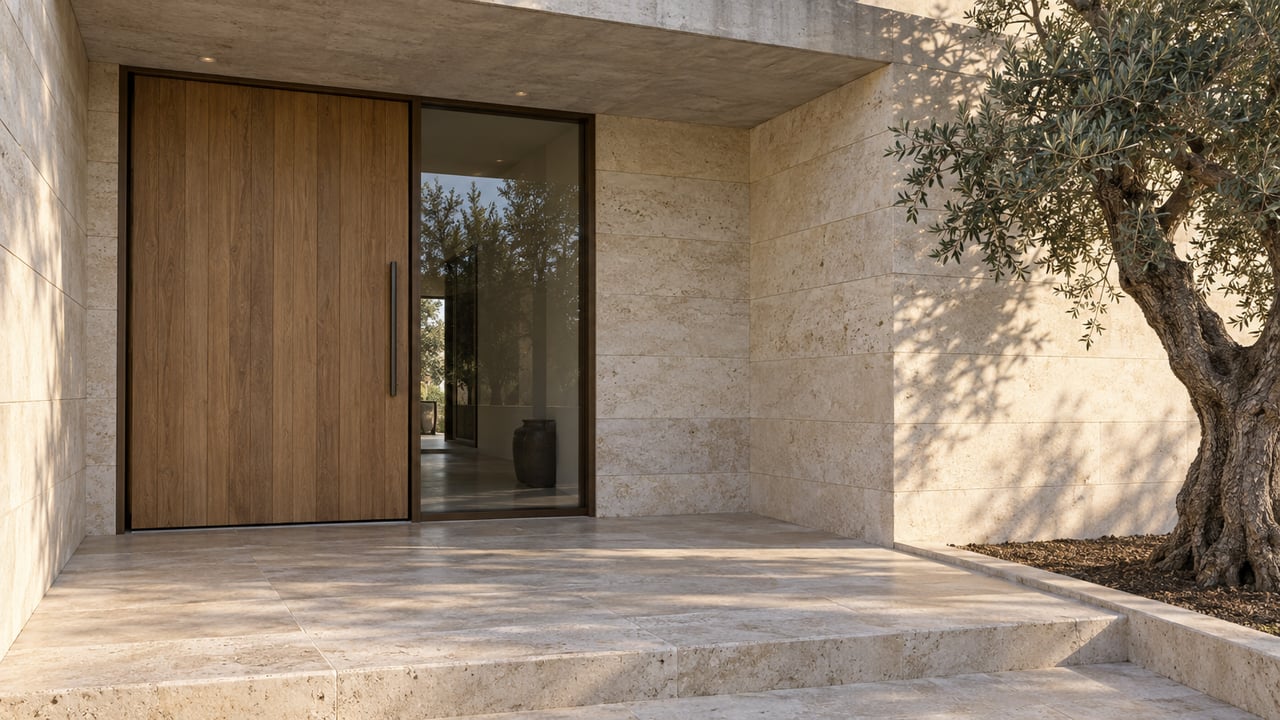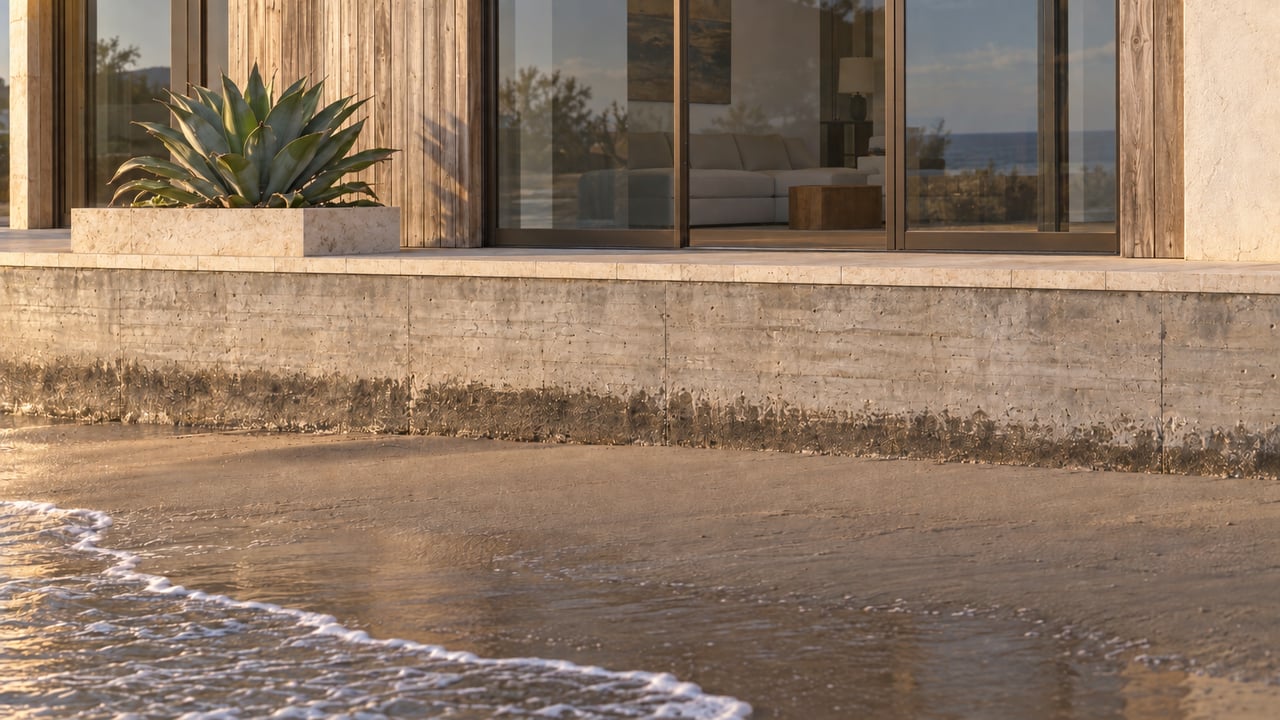
The guard gate on Malibu Road is the part everyone notices. It is not the part that decides how someone inside Malibu Colony actually gets to the beach, the market, or the pier on a given afternoon. That comes down to a county stairway most visitors walk past without seeing, two pedestrian gates built into the community's own perimeter, and whatever the tide is doing that day.
Malibu Colony reads as sealed off, and in one sense it is. It has been a guard-gated, private community since its earliest days as the Malibu Movie Colony, developed in the late 1920s by May Rindge and adopted almost immediately by early film stars. Roughly 120 homes sit along a stretch of sand about a mile long, split between beachfront lots and a second row set back from the water. The privacy is real. The shoreline sits a few feet from the back door.
The One Stairway
Getting onto the sandutside the gates is where most people get stuck, because there is exactly one official way to do it. The Mountains Recreation and Conservation Authority maintains the Malibu Road Beach Access, a stairway that the agency describes as the only public access point to the beach between Malibu Lagoon State Park and Amarillo Beach. It comes with a small viewing platform, three parking spaces, and a timed-locked gate, meaning it is not open around the clock. If someone doesn't know to look for it on Malibu Road itself, rather than off Pacific Coast Highway, they will miss it entirely.
There is a second, unofficial way in. At 24056 Malibu Road there's an open stretch where people climb down to the sand, but it requires dropping over large boulders and the county does not recognize it as an official public access point. It works. It is not built for it.
The third option skips the boulders and the stairway altogether and uses the tide. Because there is no public entrance directly into the Malibu Colony neighborhood, the standard route is to walk west at low tide from Malibu Lagoon State Beach, or walk east along the sand from Malibu Road. Either way, the walk only works when the water lets it. High tide erases the route in both directions and turns what looked like a five-minute stroll into a wait.
Two Gates, Not One
Inside the guard gate, the Colony runs on its own smaller set of doors. Listings for homes on the sand describe controlled pedestrian gates at both ends of the community, gates that open directly onto Cross Creek and Malibu Colony Plaza. For anyone living inside, that means reaching the plaza's shops and restaurants, or the retail cluster at Cross Creek, doesn't require getting in a car or dealing with the main vehicle gate at all. It is a detail that shows up in property descriptions rather than tourist guides, because it matters to people who already have keys, not to people deciding whether to visit.
That interior geography is also why the Colony gets described as one of the few genuinely walkable neighborhoods in Malibu. The vehicle gate on Malibu Road controls who drives in. The pedestrian gates control how anyone already inside actually spends a Tuesday.
Why the South End Holds Its Sand
Not every stretch of Colony beach behaves the same way, and the difference comes down to a rock formation most people know by name before they know why it matters. The south end of the community, in front of the surf break locals call Old Joe's, sits behind a natural reef. That reef breaks up incoming swell before it reaches the shore, and it's credited with helping preserve the sand on that stretch in a way the rest of the beach doesn't get for free. It's the same reason a handful of listings for homes on that end specifically call out their position "directly in front of" Old Joe's as a selling point distinct from Colony frontage in general. The reef isn't decoration. It's doing quiet, structural work on what the beach looks like at low tide compared to a hundred yards up the sand.
The Two Directions Out the Gate
Once someone is out one of those pedestrian gates, the errand run splits in two directions, and each one is a genuinely different version of Malibu.
One direction leads to Malibu Colony Plaza, at Webb Way and Pacific Coast Highway. Ralphs anchors the center, which covers the unglamorous stuff: groceries, a pharmacy run, the everyday list. Around it sits Zinqué, a café and wine bar with a patio that gets used as much as the tables inside, Ollo for a sit-down breakfast or dinner, Bui Sushi for a fast weeknight order, and Malibu Yogurt & Ice Cream for the smaller version of all of the above. It is a plaza built for errands, not for an afternoon out.
The other direction, past the Colony's other gate, puts a short walk between someone and Nobu, the Malibu Beach Inn, and the Malibu Country Mart. That's the version of central Malibu built for a longer lunch and a slower afternoon rather than a grocery run. Both are close enough to reach on foot from inside the gates. Neither requires touching Pacific Coast Highway by car, which on a Saturday in summer is its own kind of relief.
What This Actually Adds Up To
None of this is about whether Malibu Colony is worth living in. People who already live there aren't weighing that question, they're deciding which gate to use, whether the tide allows the walk to Surfrider today, and whether it's a Ralphs day or a Nobu day. The privacy the Colony is known for isn't the product of a single locked gate on Malibu Road. It's the product of a small, specific set of access points, most of them easy to miss unless someone already knows where to look, working together to make a mile of sand feel far more sealed off than it is.
That's the part worth knowing even for people who aren't inside the gates yet. Getting to the beach on foot means knowing about one county stairway with a timer on its gate, or checking a tide chart before a walk that looks shorter on a map than it actually is.
If you're curious how Malibu Colony's access points, sand conditions, or interior layout affect a specific property, I'm happy to walk through it with you. Reach out to Alexander Purewal for a closer look.
This article is general information, not legal, tax or financial advice. Consult a qualified professional about your situation.